Skip to content
Yonder
Early capital for marketplace founders

First check for marketplace founders building new economies

I built Yonder for marketplace founders who are early enough to look weird and ambitious enough to create a market. I invest $50K to $100K at first-check and pre-seed, then help founders get the market and the next round moving.

Pitch Yonder Become an LP
No warm intro required
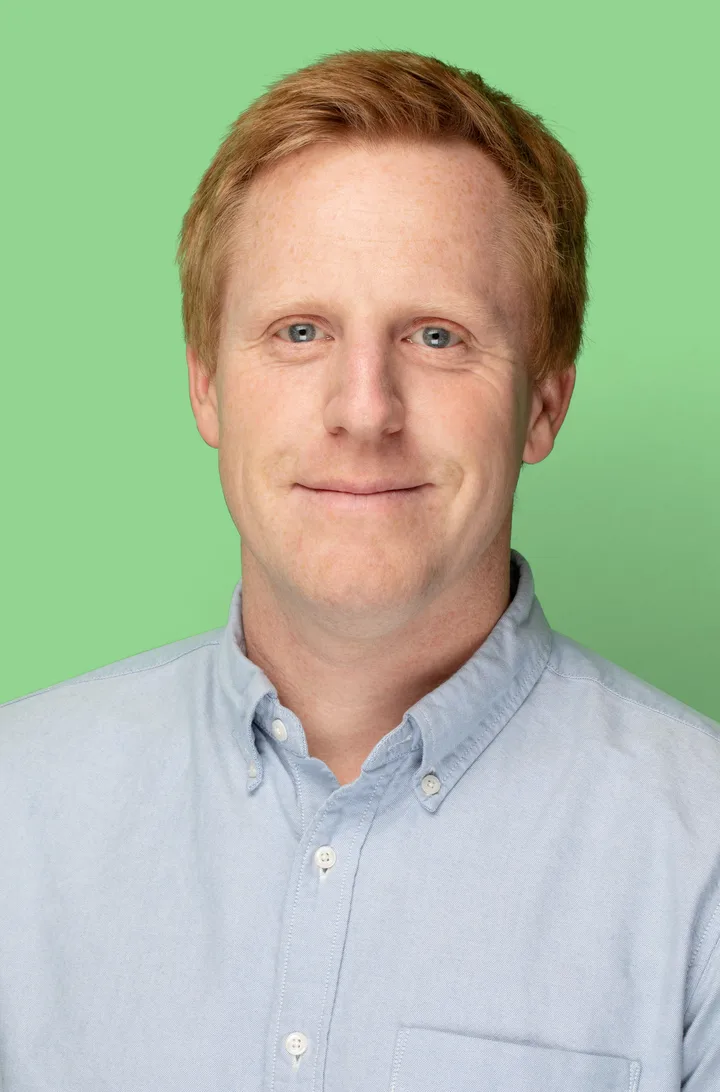
Colin Gardiner, founder and general partner of Yonder
Colin GardinerMarketplace operator turned first-check investor
Let your model do the reading

Ask your AI about Yonder.

It will ask whether you are a founder or an LP, then explain where Yonder fits and what to do next.

“Copy for any AI” works with any LLM or agent.

marketplace rentals built at Outdoorsy
$3B+
career marketplace checks
50+
venture capital raised as an operator
$250M+
marketplace founders, operators, and investors reading Take Rate
5,000+

Why Yonder exists

I built the marketplace fund I wish had existed.

When I was helping build Outdoorsy, too many investors evaluated a marketplace like SaaS or compared every network to Airbnb and Uber. They missed what actually mattered.

We went on to build more than $3 billion in rentals. That experience taught me how much good marketplace founders need an investor who understands liquidity, supply, trust, take rate, and sequencing before the numbers look obvious.

Yonder is my answer: early capital, honest judgment, and practical help from someone who has lived the same problems.

Why I started Yonder
Marketplace experience across
  • Outdoorsy
  • Ancestry.com
  • Tripping.com
  • Roamly
  • Karta Labs
  • Take Rate

Selected portfolio

Markets that looked strange before they looked inevitable.

I invest across industries, but the pattern is consistent: fragmented supply, painful transactions, and a product that can make the market move.

  • 01B2C · PRE-SEED
    Jewelry

    Alloy

    Jewelry marketplace connecting consumers directly with wholesalers.

  • 02B2B · PRE-SEED
    Waste

    Downstream

    Marketplace and software for commercial waste services and equipment rentals.

  • 03B2B · PRE-SEED
    AI

    Felt Sense

    AI automation engine for building and operating new companies.

  • 04B2B · PRE-SEED
    Fleet services

    FuelUp

    Fleet fueling and service marketplace built for small and midsize businesses.

  • 05B2C · SEED
    Collectibles

    Rare Candy

    Collector-first marketplace and product layer for trading cards.

  • 06B2B · PRE-SEED
    Construction

    RUCK

    Three-sided marketplace for buying and moving construction materials.

Meet the selected portfolio

Where I get useful

The check matters. The judgment after it matters more.

Marketplace problems are rarely solved with generic advice. I work directly with founders on the decisions that determine whether a market gets liquid or gets stuck.

What it is like to work together
  1. 01

    Get the market moving

    Supply, demand, liquidity, trust, incentives, and which side to unlock first.

  2. 02

    Build the business model

    Take rate, pricing, unit economics, workflow depth, and what should sit around the transaction.

  3. 03

    Tell the right fundraising story

    A deck and narrative that help generalist investors understand why this market can be enormous.

  4. 04

    Find the next believer

    Thoughtful introductions to marketplace founders, operators, customers, and the next investors.


The Yonder lens

The hard part is not building the app. It is getting the market to move.

The best marketplaces solve the ugly operational work around a transaction. That work is often where the product, the data, and the moat begin.

01

Constrained supply

Credentialed, local, fragmented, regulated, or simply hard to reach.

02

Better workflow

A product that makes the transaction easier, faster, and more trusted.

03

Real liquidity

Better matches pull more supply and demand into the network.

04

Compounding data

Transactions improve pricing, trust, matching, and defensibility.

Read the full investment thesis

Take Rate

I share the marketplace playbook in public.

More than 5,000 founders, operators, and investors read Take Rate for practical ideas on liquidity, marketplace design, fundraising, and the companies changing how markets work.


Fundraising FAQ

Marketplace fundraising questions I get a lot.

Straight answers from how I look at early marketplace rounds, with links to the deeper Take Rate pieces and Yonder founder guides.

What do investors look for in a marketplace startup?
Liquidity you can feel. Supply that actually shows up. Buyers who come back. A take rate (or another monetization path) that makes sense once the market starts moving. I care about whether a small group of people is already transacting for a real reason, not a huge TAM slide. Constrained or hard-to-reach supply, a workflow that makes the transaction easier, and early proof that density improves matching are usually the story. AI can help with ops and matching, but the durable part is still the network: people participating, proprietary data, and the ugly work around the transaction. More on the numbers I use: Marketplace metrics. More on what Yonder underwrites: Investment criteria and the thesis.
How much traction do I need to raise a pre-seed or seed round?
It depends on the round, but the bar has gone up. For first-check and pre-seed, I often back companies before the numbers look obvious. A small set of suppliers who respond fast, demand that will actually transact or change a workflow, and repeat behavior on at least one side can be enough if the market story is sharp. Seed is a different conversation. Across US VC-backed tech (SVB H1 2026), median revenue at Seed moved from about $156K in 2021 to about $363K in 2025. That is not a marketplace-only dataset, and it is not a hard cutoff, but it is the direction of the market. For marketplaces, translate revenue into GMV at your take rate. A company doing about $15M GMV at a 10% take rate is about $1.5M in revenue. Getting from a typical Seed level of progress to a typical Series A level can mean growing GMV on the order of about 11x at a constant take rate. Full Carta / SVB / Yonder breakdown: Marketplace Startup Fundraising 2026
Can I raise funding before generating revenue?
Yes, especially at first-check and pre-seed. Plenty of marketplace companies still raise with little or no revenue if the founders know the customer, the supply is real, and there is a clear path to early liquidity. Pre-product or post-product with little revenue (roughly up to about $50K annual revenue run rate) often clusters around lower valuations in the Yonder ask data. Once you have early revenue, the conversation gets easier. By Seed and especially Series A, most institutional rounds want paid activity, repeat behavior, and a credible path to the next milestone. Seed extensions are common now because the Seed-to-Series A jump got harder. Yonder's typical first check is $50K–$100K at first-check / pre-seed. Pitch anytime: Pitch Yonder
Which metrics should I include in my marketplace pitch deck?
Lead with the metrics that prove the market is moving, then show that the economics can work. Put GMV (or the right volume metric for your category), take rate / transaction revenue, match or fill rate, completion, time to match, retention on at least one side, and contribution after variable costs where you have them. Label booked vs completed, and keep refunds and cancellations honest. A pretty signup chart with no transactions does not help. For the deck itself, I use a simple structure: intro, team, metric hook, market, problem, solution, business model, go-to-market, traction, competition, financials, ask, close. Pull traction forward if it is your strongest slide. Guides: Marketplace metrics and Pitch deck structure
How should I calculate my marketplace's market size?
Start with a beachhead you can actually win, then show the expansion. Do not lead with a giant industry number and hope people squint. I want customer count × expected spend for the first segment, with sources next to the math. Then SAM and TAM as the same buyer job getting bigger, not a different company. The beachhead is proof. It is not the ceiling. If the first vertical died tomorrow, what job-to-be-done still exists? A useful deck pattern: a metric hook that reframes the category (for Outdoorsy it was "one in six U.S. households owned an RV"), then the market-size slide with assumptions visible. More: Pitch deck structure and thesis
How do investors value marketplace startups?
At early stages, valuation is mostly about progress, demand for the round, and how clean the story is. Revenue helps, but it does not print a price by itself. From Yonder's sample of 2,243 fundraising asks (what founders asked for, not always what cleared), marketplace annual revenue run rate tends to cluster like this as a starting point: - Little to no revenue (up to about $50K): roughly $5–8M - Early revenue (about $50K–$500K): roughly $8–12M - Meaningful revenue (about $500K–$1M): roughly $12–15M - A year-ish+ of revenue (about $1M–$3M): roughly $15–20M+ - Consensus / hot AI deals: much wider, and often much higher Carta's marketplace data for 2026 shows fewer companies getting funded at Pre-Seed and Seed, while median caps for the ones that clear the bar have held up better than the volume numbers suggest. Series A is where round count, capital, and valuations have been hit hardest. Source: Marketplace Startup Fundraising 2026 — Yonder first-check posture: Investment criteria
How much should I raise, and what milestones should it fund?
Raise enough to hit the next proof points with margin, not just the smallest dilution number on a SAFE. Work backward from the revenue, GMV, liquidity, and runway the next round will want. At Seed, I increasingly think in two steps: the first Seed proves the wedge; an extension often funds the climb toward an obvious Series A. Plan for that gap instead of treating an extension as failure. On the ask slide, say the amount, the major uses (product, GTM, key hires), and the milestones that make the next raise obvious. Low dilution only helps if the round actually buys the runway. More: Pitch deck structure and Marketplace Startup Fundraising 2026
Which venture capital firms invest in early-stage marketplaces?
The list changes every year, and a generic marketplace-investors spreadsheet goes stale fast. What has been true lately: a lot of generalist capital stepped back from classic marketplace pitches, while specialists and operators who understand liquidity still write early checks. That is a big part of why I started Yonder. I write first checks of $50K–$100K into marketplace and network-effect companies at first-check / pre-seed, usually around $10M post and under when the deal fits. After investing, I help with market sequencing, the fundraising story, and introductions to the next believers. If you want the specialist check first, pitch Yonder (Pitch Yonder). For the broader market picture, start with Marketplace Startup Fundraising 2026
Why do investors pass on marketplace startups?
Most passes I see cluster around a few patterns: - It is not really a marketplace (directory, affiliate, media, or software with no transaction). - Thin matching that looks easy to copy, especially once AI makes the interface cheap. - No path to liquidity: supply will not engage, demand will not change behavior, or both sides stay cold. - Lumpy or infrequent transactions with no clear way to increase frequency or AOV. - Fundraising story that asks generalists to believe a giant TAM without beachhead proof. - Stage mismatch: asking for Seed or Series A terms without the revenue, retention, or density those rounds now want. I pass for fit all the time. Sometimes I am wrong. If the market is real and the wedge is working, keep compounding liquidity and come back when the numbers make the next round obvious. Criteria for Yonder specifically: Investment criteria
For founders

Building a new economy?

Send it. No warm intro required.

Pitch Yonder
For LPs

Looking for focused access to first-check marketplace investing?

A concentrated, operator-led approach to the earliest marketplace rounds.

Become an LP